

Természetvédelem
Striped hyena photographed in Israel

 MagyarNoa Valtzer, in the Negev desert in southern Israel, successfully approached a striped hyena and photographed it before it ran away. During the programme, outside the local national park area, they targeted a striped hyena’s den, which they had some clues about, but had not yet been able to observe the Hyena itself. Despite the failure of their previous search, they were looking for new evidence to prove the presence of the species.

Foto: Noa Valtzer – Agro Jager News
After a series of coincidences, they finally came across a fresh hyena track in a bank of a dry sream. The search was then accelerated, as a burrow was found not far from the track. In front of the entrance, there were many bones and the characteristic “musky smell” of the species. In Israel, the striped hyena’s burrow is a few metres deep and may have several entrances. Sometimes adults will move to a different burrow, but they may also form a larger burrow system with different entrances.
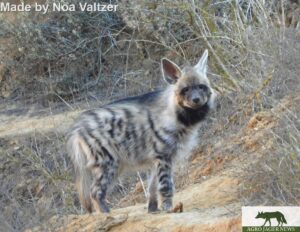
Foto: Noa Valtzer – Agro Jager News
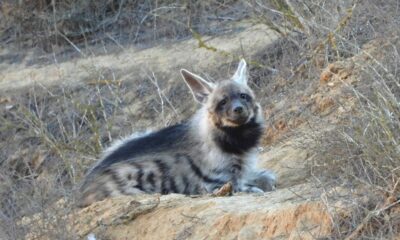
Much to their surprise, a young, striped hyena emerged from the burrow. A species wary of humans, the cub was nevertheless curious and inquisitive. In Israel, no case of a striped hyena attacking a human has ever been documented. This young individual has never encountered a human. He came out of the den, stopped, tired himself out, and lay down not far from the entrance, where he continued to watch the researchers. The sighting of Noa and his colleagues is a curiosity even in Israel, where the hidden nocturnal activity of the striped hyena makes it particularly difficult to observe. Unfortunately, no reliable data on the species’ biology has been available so far.

Foto: Noa Valtzer – Agro Jager News
A moderately threatened species by the World Conservation Union, protected in Israel. The striped hyena belongs to the hyena family and is found in Africa and the Arabian Peninsula. However, due to its cryptic lifestyle, it is classified as a lesser known species. It is the only hyena species that occurs outside Africa. The striped hyena is more of a scavenger than its African relative, the spotted hyena. It occasionally preys on small mammals, but most of the time it prefers to eat scavenger hunts at night. For this reason (and developmant pressures), more and more striped hyenas are hit on the roads in Israel every year.
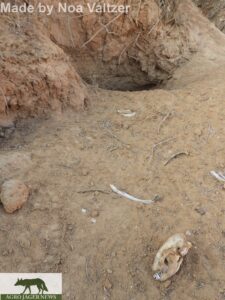
Foto: Noa Valtzer – Agro Jager News
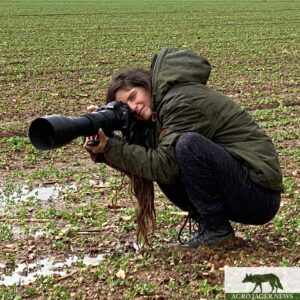
Noa Valtzer at work. (Foto: Michal Yaakov Itzhaki – Agro Jager News)
The role of the striped hyena in the Israeli fauna is extremely important and valuable, as it is a classic scavenger that cleanses nature and prevents the spread of disease. However, the striped hyena population is threatened by a number of human factors. In Israel, the biggest problem is habitat loss. In populated settlements, improperly managed waste can also cause many problems. Poaching is also decimating the population in some places and many people fear the striped hyena
In Israel, several programmes have been initiated to protect the species. Involving a wide range of the population, experts give a number of lectures on the protected species, especially to children. Thanks to this education, more and more people are becoming aware of the role and importance of hyenas.
***
Noa Valtzer grew up in the northern edge of Israel, the Hula Valley. Her life is closely linked to nature conservation, and she is a specialist in tracks&signs of wild animals. She is one of the field experts working on several wildlife conservation projects in Israel, and is actively involved in monitoring different species of wildlife in various Israeli conservation organizations. A well-known wildlife tracking expert in Israel, she also uses her knowledge on safaris in East Africa, where she also works as a guide, Noa Valtzer told us about the valuable monitoring.
Written by: Dr. Gergely Szilágyi
Foto: Noa Valtzer
The entire content of the article (text and image) can be used by anyone with a hyperlink to the link and the same title, even without prior permission.

Természetvédelem
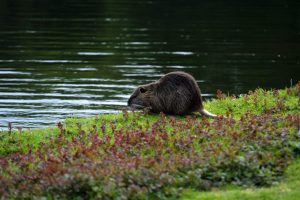
KITEKINTŐ: Németország, Bonn: a város ismét csökkenteni akarja a nutriaállományt a Rheinauensee térségében
Bonn városa vadászattal kívánja csökkenteni a nutriák számát. A Dél-Amerikából származó nutria Németországban is inváziós faj, mivel természetes ellenségei alig vannak, gyorsan szaporodik, és jelentős kárt okoz a vízparti élőhelyekben.

Természetvédelem
Trópusi színek a Kis-Sárrét egén: megérkeztek a gyurgyalagok
Ebben az időszakban napi rendszerességgel találkozhatunk vonuló gyurgyalagokkal.
A Körös-Maros Nemzeti Park Kis-Sárrét részterületén ebben az időszakban napi rendszerességgel találkozhatunk vonuló gyurgyalagokkal. A pusztákon sétálva már messziről hallhatjuk, amint csapatokba verődve, egymással kapcsolatot tartva hallatják jellegzetes, gurgulázó hangjukat, amiről a nevüket is kapták. Ha felpillantunk az égre, meg is láthatjuk ezeket a trópusi madarakra jellemző, igen színes tollazatot viselő madarakat, melyek megjelenésével nem sok hazai madárfajunk vetekedhet. A gyurgyalag hasa és mellrésze kékeszöld, dolmánya, feje gesztenyebarna, vállfoltja és torka aranysárga.
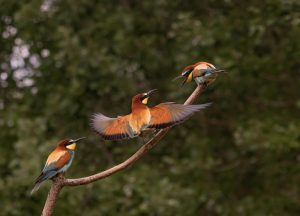
Fotó: Wenczel Erika – KMNPI
Egyik legkésőbb visszaérkező, melegkedvelő madarunk, amely csak május első harmadában jön meg telelőhelyéről. Ősszel augusztus második felében megkezdi vonulását, hogy a telet melegebb területeken, Kelet- illetve Dél-Afrikában töltse.
Viszonylag rövidebb itt tartózkodása alatt repülő rovarokat zsákmányol, amelyeket valamilyen leshelyről, például ágról, vagy villanydrótról figyel és enyhén hajlott csőrével, röptében fog el. Méhészmadár néven is emlegetik, mivel étlapján méhek és darazsak is szerepelnek.
Telepesen költ, lösz- és homokfalakban, homok- és agyagbányákban, csatornák, folyók meredek partfalában alakít ki üregeket fészkelés céljára. Évente ebben a rövid időintervallumban csak egyszer költ, fészekalja 6-7 tojásból áll, melyeken mindkét szülő kotlik. A fiókák táplálásában is mindketten részt vesznek, a kis gyurgyalagok pedig 30-34 napos korukban már ki is repülnek.
A folyószabályozások előtti időkben a természetes, függőleges partfalakon jóval nagyobb telepekben fészkeltek a gyurgyalagok. Állományaikra napjainkban sok veszély leselkedik, a homok és löszfalak leomlásakor a költőhelyek megsemmisülnek.

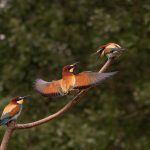
Forrás: KMNPI
Fotó: Wenczel Erika
Természetvédelem
Orbán Zoltánt nevezték ki az Élő Környezet Minisztérium szóvivőjének
A hiteles környezetvédelem alapja a párbeszéd. Ezért kértem fel Orbán Zoltánt, a Magyar Madártani és Természetvédelmi Egyesület szaktekintélyét minisztériumunk szóvivőjének – közölte Gajdos László miniszter.

Orbán Zoltánt nevezték ki az Élő Környezet Minisztérium szóvivőjének.
Az elmúlt 15 évben a civil szervezeteket sokszor akadályként kezelték, én szövetségesként tekintek rájuk. Hiszek abban, hogy csak az elkötelezett szakemberek bevonásával építhetjük újjá az ágazatot. Bízom benne, hogy a hangja eljut mindenkihez – emelte ki Gajdos László miniszter.
Forrás:
Gajdos László miniszter Facebook oldala

Dél felé terjed a járvány: Mogyoródon talált vaddisznókban mutatták ki az afrikai sertéspestis vírusát

Dr. Bárándy Péter a Védegylet új elnöke

Vadat és halat is lopott egy orvvadász

Kiskunhalason mutatta ki a Nébih a lovak fertőző kevésvérűséget (FKV)

KITEKINTŐ: Románia – visszatért a medve a településekre, az ember pedig fél az erdőtől

Kiss Sándor: A Nagy-Sárrét apró vadászai – Eredeti képekkel

KITEKINTŐ: Japán „Farkasszörny” robotokat vet be a rekordszámú medvetámadások visszaszorítására

Hétfőtől már csak Szabolcs-Szatmár-Bereg vármegyében lesz érvényben tűzgyújtási tilalom

KITEKINTŐ: Németország, Bonn: a város ismét csökkenteni akarja a nutriaállományt a Rheinauensee térségében

Trópusi színek a Kis-Sárrét egén: megérkeztek a gyurgyalagok

Nem volt elejtési jogosultsága

Lemondott dr. Semjén Zsolt, a Védegylet elnöke

Életbak puskavégen

Új kutyajóléti szabályok: ezt kell tudniuk a vadászoknak

Rekord pontyok a Pilismaróti öbölből

A nagy bajszos

Szirti sassal vadászott a macskákra

110 méterről lőtte le a korongot Davide de Carolis – Benelli Advanced Impact bemutató Hatvanban

KITEKINTŐ (Németország): Lezárult a módosítás: a farkas is szerepel a vadászati törvényben
